Resale · Saudi Arabia
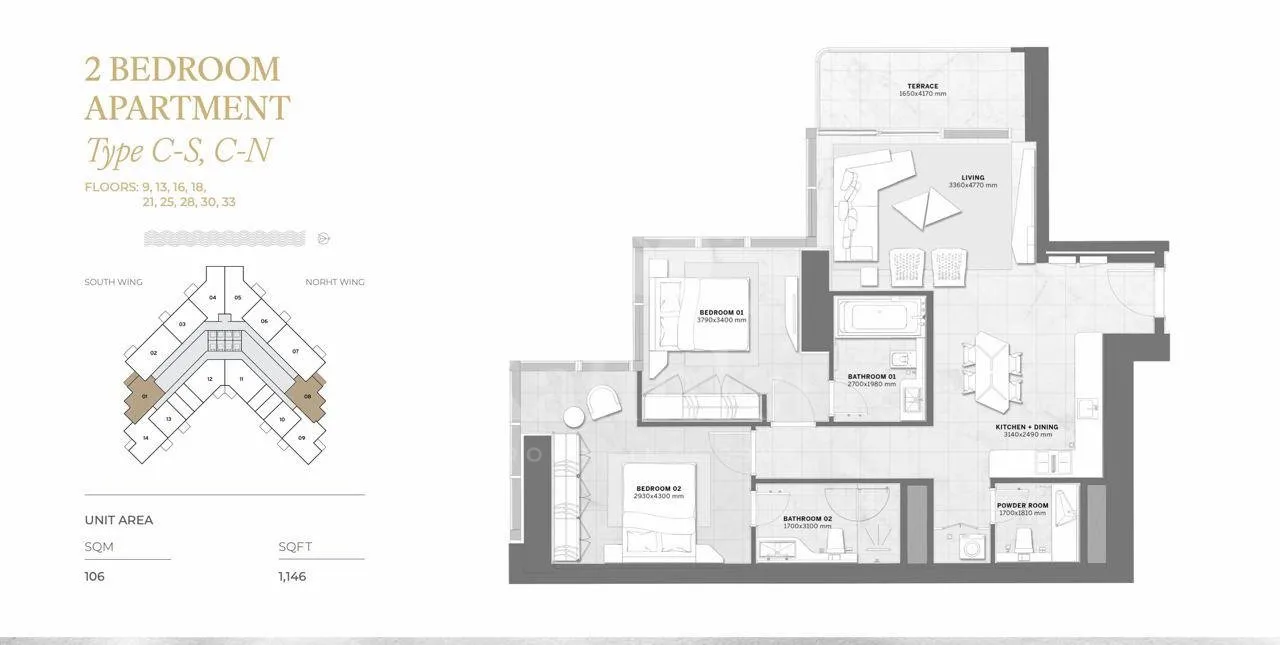
Serviced apartment 106 m² — Saudi Arabia
Trump Tower, Jeddah · Resale · Q4 2029
2 2 106 m²
Online viewing · remote deal
Crypto payment accepted
€784,749
€7,814 / m²

The market opened to foreigners on 21 January 2026: ownership is permitted within designated zones, whose scope is set separately.
The law allowing non-resident property ownership took effect on 21 January 2026, permitting both full ownership and long-term usage rights — for individuals and foreign companies.
There is no personal income tax — total transaction costs are typically estimated at around 10%.
The national transformation programme is generating new property supply across the country.
Ownership is allowed only in approved zones — the list is set by a Council of Ministers and REGA document and may be extended. In Mecca and Medina, ownership is restricted to Muslims.
Enforcement practice under the new law is still forming — the regulatory risk here is higher than in the UAE or Qatar, where the regime has years of track record. Relying on a local lawyer matters more here.
Properties available right now. The catalogue price is the same figure quoted here.
View propertiesTell us the amount and the goal, and we'll come back with options from developers and partners that are not in the catalogue.
Send a requestThe 3 most affordable of 8
Resale · Saudi Arabia
Trump Tower, Jeddah · Resale · Q4 2029
Online viewing · remote deal
Crypto payment accepted
€7,814 / m²

Resale · Saudi Arabia
Neptune Villas · Resale · Q4 2027
Online viewing · remote deal
Crypto payment accepted
€3,062 / m²

Resale · Saudi Arabia
Neptune Villas · Resale · Q4 2027
Online viewing · remote deal
Crypto payment accepted
€3,827 / m²
Goal and budget — and the buyer's status, which determines which zones are available.
We confirm the property sits inside a zone where foreign ownership is allowed under the REGA document.
A foreign resident may own one residential unit; a non-resident may buy only within approved zones.
We check the property and its paperwork before anything is signed.
Registration is mandatory for every property acquisition in the country.
Since the regime is new, we track changes in enforcement practice and the zone list together with you.
The law on real estate ownership by non-Saudis took effect on 21 January 2026 — 180 days after publication on 25 July 2025. It allows both full ownership and long-term usage rights, for individuals and foreign entities.
In zones defined by the Geographic Scope Document issued by the Council of Ministers and the Real Estate General Authority (REGA). For non-residents, buying is permitted only in such approved zones, so a specific address's status is confirmed before the deal.
Foreign residents are limited to one residential unit. For non-residents, acquisition is permitted in approved zones, and the terms on numbers are being set by secondary legislation — confirmed by a local lawyer.
In Makkah and Madinah ownership remains restricted to Muslims. This is a separate restriction operating independently of the general regime of geographic zones.
Transfer fees of up to 5% may apply, and a foreign buyer's total transaction taxes and fees are commonly estimated at around 10%. Because the regime is new, exact figures are confirmed by a lawyer for the specific transaction.
There is no automatic pairing. The route to status is regulated separately and the regime for non-residents is still taking shape. Terms are confirmed at the time of the transaction rather than from general guides.
Mainly in the maturity of the regime. In the UAE the rules on foreign ownership have been settled for years, with escrow mechanisms and established practice. In Saudi Arabia the law has only just taken effect, practice is forming and the list of zones is being refined — regulatory risk is higher.
Yes, there are listings in our catalogue. Given how new the regime is, we separately confirm that foreign ownership is permitted for each property before any money moves.

Apartments cost roughly SAR 2,700 to 6,200 per m2 depending on the city, prices rose about 1% over the year to Q2 2026, and a foreign buyer should budget extra for transaction costs. Numbers and worked budgets.

Headline gross yields of 6% to 9% look strong, but the net figure after fees, vacancy and tax is usually 3% to 5%, and Riyadh rents are frozen until 2030. Here is how to read the numbers.
What apartments in Riyadh and Jeddah cost in 2026, what yields are quoted and why the figures disagree, how to choose a building and which risks are specific to foreign buyers.
Since 2026 a foreigner can own property in Saudi Arabia, but only in designated zones. What the law allows, what it costs, how Premium Residency fits in and what to check.
The rules say who may own, where, and what fees and penalties apply, including a 2% disposal fee in the main cities.
Saudi Arabia is the newest market for foreign buyers in our catalogue. The law on real estate ownership by non-Saudis took effect on 21 January 2026 and opened ownership within designated geographic zones.
A market that opened in 2026: the law allows both full ownership and long-term usage rights, for individuals and foreign entities alike. Major development projects under the national transformation programme are creating new supply. No personal income tax.
Benchmarks for taxes, purchase and holding costs and rental yield. Exact figures depend on the property and your situation.
No personal income tax. Transfer fees of up to 5% may apply on the transaction; total costs are commonly estimated at around 10%.
Transfer fees of up to 5% may apply on the transaction. A foreign buyer's total transaction taxes and fees are commonly estimated at around 10%. Saudi Arabia has no personal income tax. Because the regime is new, exact rates and how they apply are confirmed by a local lawyer for the specific transaction.
1. Confirm the property sits in a zone where foreign ownership is permitted. The Council of Ministers and the Real Estate General Authority (REGA) issued a Geographic Scope Document defining those areas. 2. Establish the buyer's position: foreign residents may own one residential unit, while ownership by non-residents is permitted only in approved areas. 3. Legal due diligence on the property. 4. Register the acquisition — registration is mandatory for all acquisitions.
Lending to foreign buyers is developing alongside the new regime; terms should be confirmed with the specific bank and project.
Property ownership and the route to status are regulated separately, and the regime for non-residents is still taking shape. Do not assume an automatic "purchase plus residency" pairing — the terms are confirmed at the time of the transaction.
The market is only opening, which means both opportunity and uncertainty: practice under the new law is still forming and the list of zones is being refined by secondary legislation. For a buyer this is a market with higher regulatory risk than the UAE or Qatar, where the regime has been settled for years.
What to bear in mind: — ownership is possible only within approved zones; the scope is set by the Geographic Scope Document and may be extended; — in Makkah and Madinah ownership remains restricted to Muslims; — foreign residents are limited to one residential unit; — the regime is new: practice is still forming, which makes relying on a local lawyer particularly important here. Checked in September 2026. Thresholds, rates and programme terms change — confirm the current requirements with a lawyer in the country before you buy.
Figures are indicative, change over time and depend on the specific property and your circumstances. Obtain independent legal, tax and financial advice before any purchase.
Tell us your goal and budget — we'll send a curated selection from trusted local partners, with no obligation.